Sustainability at AWS re:Invent: From Session Guide to Main Stage
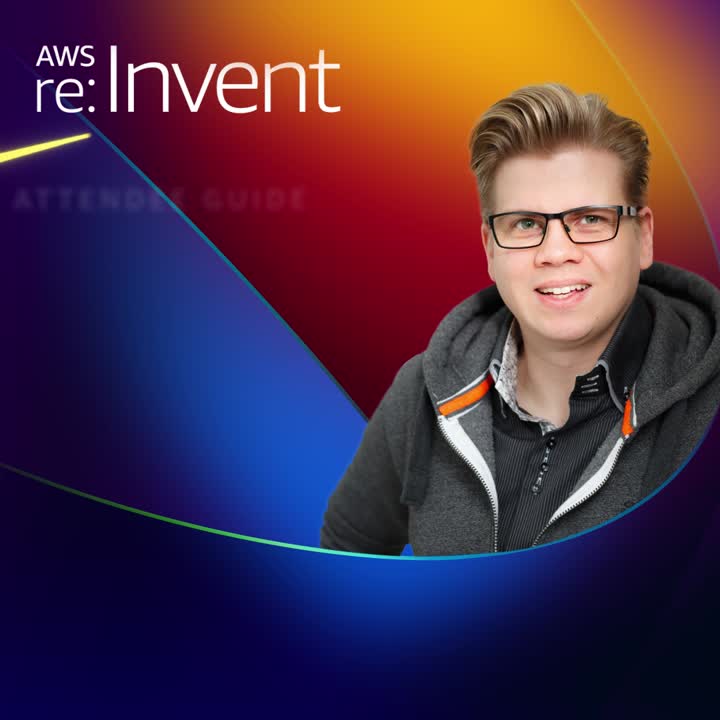
I had the honor of writing the sustainability-focused session guide for one of the largest and most prestigious IT events in the world - AWS re:Invent 2022. And then I ended up on stage as well.
The session, PEX201: Building a sustainable practice for tomorrow, had me joined on stage by Mansi Vaghela and Deborshi Choudhury from AWS. My part discussed how we built the “Knowit Sustainable Cloud” practice to help our customers reach their sustainability outcomes through cloud technology.
Why Sustainability in Cloud Matters
There’s an interesting paradox in the technology industry. We talk endlessly about digital transformation, about moving workloads to the cloud, about optimization and efficiency. But for a long time, the conversation about what all of this means for the planet was surprisingly quiet.
Cloud computing does offer genuine sustainability benefits. Hyperscale data centers are significantly more energy-efficient than most on-premises alternatives. Shared infrastructure means better utilization rates. And cloud providers are investing heavily in renewable energy. But “better than before” is not the same as “good enough.”
The uncomfortable truth is that as we move more workloads to the cloud and especially as AI workloads explode in scale, the absolute energy consumption of cloud computing continues to grow. Being more efficient per unit of compute doesn’t help if the total units of compute are growing faster than the efficiency gains.
Building a Sustainable Cloud Practice
When we set out to build the Knowit Sustainable Cloud practice, we started from a simple observation: most organizations had sustainability goals and most organizations were moving to the cloud, but very few were connecting these two strategies in any meaningful way.
The practice wasn’t about greenwashing or adding a sustainability label to existing cloud work. It was about genuinely integrating sustainability thinking into cloud architecture decisions, migration strategies, and operational practices.
This meant asking questions that aren’t typically part of a cloud architecture review. What’s the carbon footprint of running this workload in this particular region? Could we achieve acceptable latency from a region powered by more renewable energy? Are we right-sizing our resources, not just for cost, but for energy consumption? Can we schedule non-urgent batch processing for times when the grid is cleaner?
These aren’t revolutionary questions. But the fact that they weren’t being asked systematically was the gap we set out to fill.
The EMBA Connection
This work was happening in parallel with my Executive MBA studies at Aalto University, where I had just completed a three-day module about Corporate Responsibility and sustainability. The module included a session with Mika Anttonen, chairman of the board at St1, who shared his views on energy transition.
What I appreciated about Anttonen’s perspective, even when it was controversial, was his ability to justify his points logically. In sustainability discussions, logical rigor is often the first casualty. People argue from emotion, from ideology, or from whatever narrative serves their position. The ability to make strong points and defend them with data and reasoning is a skill that the sustainability conversation desperately needs.
The combination of academic sustainability education and hands-on cloud sustainability practice gave me a perspective that neither alone could have provided. Theory without practice is academic exercise. Practice without theory is just guessing with confidence.
The Cross-Organizational Challenge
One thing I want to highlight is that building this practice was fundamentally a cross-organizational effort within Knowit. We are truly a Nordic company with expertise across different countries and organizations. Key people like Magnus Karlsson, Pekka Nurmi, and Joakim Ryden contributed to building the practice, with Tony Hendrell as the executive sponsor. The cross-organizational collaboration with Christel Holmquist, Baste A. Christiansen, Joakim Pilborg, and Kaisa Oksanen among many others made this possible.
Sustainability is inherently a cross-cutting concern. It doesn’t fit neatly into one department or one country’s operations. Building a practice around it required breaking down organizational silos in ways that other initiatives hadn’t demanded. That organizational learning was perhaps as valuable as the sustainability practice itself.
What Comes Next
Standing on the re:Invent stage talking about sustainability felt like a beginning, not a conclusion. The conversation about technology’s environmental impact is only going to get more important as AI workloads scale and as regulatory requirements around sustainability reporting tighten.
The companies that will navigate this well are the ones that start integrating sustainability thinking into their technology decisions now, before it becomes mandatory. And the technology professionals who understand both the technical and the sustainability dimensions will be increasingly valuable.
This marks my 7th AWS re:Invent, and each one has been different. But this year felt particularly significant. Not because of the technology announcements, though there were plenty. But because the conversation expanded beyond “what can we build?” to include “what should we build, and at what cost?”
That’s a conversation worth having.